
Plastic stools stand on the street, so low that a European visitor might wonder if they are really meant to sit on them at first glance. A small metal filter sits above the glass. Nothing spectacular happens. One drop. A second. A third. A thick layer of sweet condensed milk awaits at the bottom. In a few minutes, strong, almost black coffee will be mixed with it and poured over ice. Hundreds of scooters pass by. Someone reads the news on their phone. Two men discuss business. Several people sit over a single coffee much longer than it would take to drink it. This is one of the most ordinary, yet most characteristic, images of modern Vietnam. Cà phê sữa đá, or Vietnamese coffee with condensed milk and ice, has become a culinary symbol of the country, almost as recognizable as phở or bánh mì.
The paradox is that coffee isn’t an indigenous Vietnamese product at all. Europeans brought it. However, it took the Vietnamese just over a century to take this foreign beverage, modify the beans, roasting method, brewing method, additives, location, and drinking ritual, and then present to the world something virtually unmistakable with any other coffee culture. The history of Vietnamese coffee is therefore not so much the story of an imported product—it’s a fascinating story of adaptation, much like that of other iconic dishes of the region (read the history of Thai Pad Thai, for example).
When did coffee appear in Vietnam?
The most commonly accepted date is 1857. That is when coffee was introduced to Vietnam by the French. Initially, primarily arabica was cultivated, but with the development of plantations, it turned out that the conditions of the Central Highlands were exceptionally well suited to robusta. Vietnam News indicates that arabica was the first cultivated species, while robusta was introduced on a larger scale in the early 20th century.
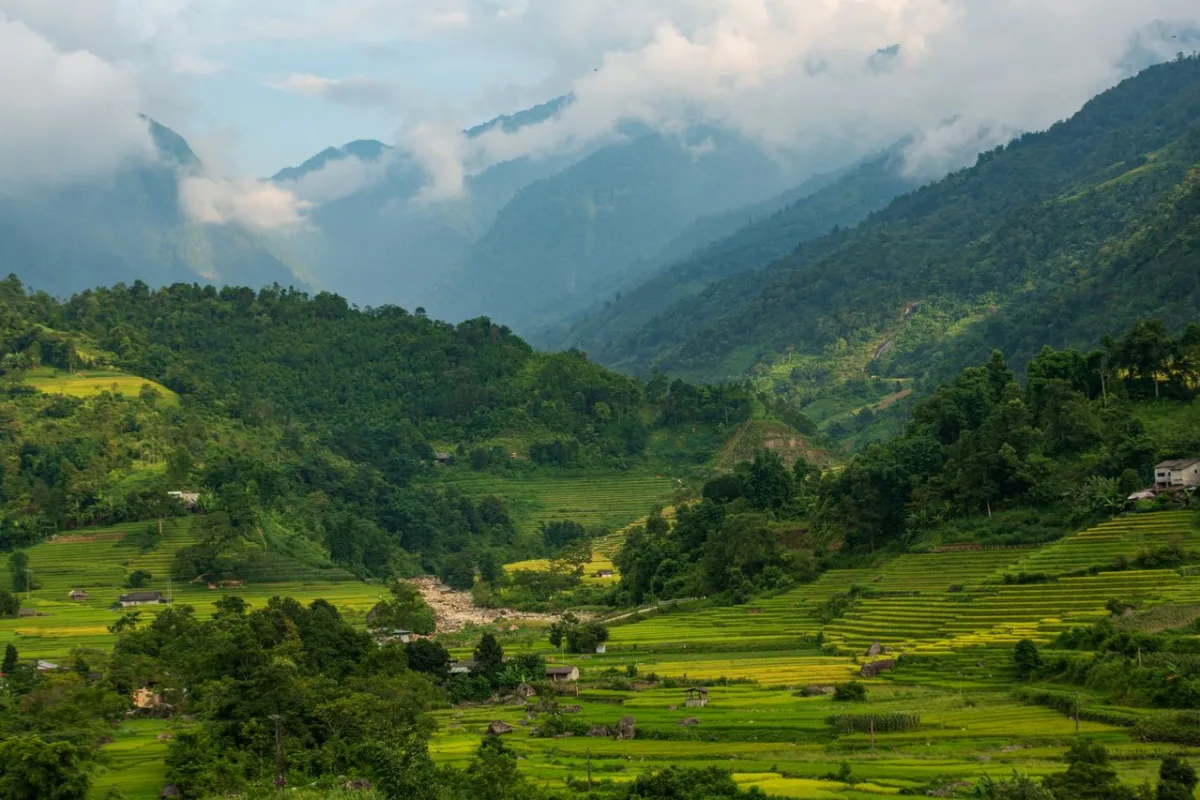
The French found particularly good conditions in the area of present-day Đắk Lắk and Buôn Ma Thuột. The highlands offered fertile, basaltic soils, a clear division into dry and rainy seasons, and a climate favorable to coffee plants. By the early 20th century, increasingly larger plantations were established there. In this way, a product brought from colonial Europe began to change the economy of parts of Vietnam.
But for a long time, Vietnam was not yet a coffee society in the modern sense. A significant portion of production was destined for export. Only gradually did coffee begin to permeate the daily lives of city dwellers. Sources concerning colonial Vietnam show that by the early 20th century, black coffee and café au lait were present in urban food culture. And then something characteristic of all Vietnamese cuisine happened – the Vietnamese stopped drinking coffee exactly as the French did. They started doing it their own way.
Why did Vietnam become the kingdom of robusta?
If we are interested in specialty coffee, we very often hear about arabica: Ethiopia, Colombia, Kenya, Panama. Arabica dominates many modern third-wave cafes. Vietnam, however, built its power primarily on Coffea canephora, or robusta. And this is not a minor detail – it is robusta to a large extent that explains why classic Vietnamese coffee tastes the way it does.
According to the USDA’s forecast for the 2025/26 season, Vietnam was expected to produce approximately 31 million 60 kg bags of coffee, of which about 30 million would be robusta and only about one million arabica. The Central Highlands account for about 90% of national production. Robusta has different properties than arabica: it is more bitter, has a heavier body, contains more caffeine, can offer notes of cocoa, dark chocolate, nuts, wood, or spices, and is less acidic than typical arabica.
It is precisely this intensity that allows it to perfectly withstand two characteristic additions to Vietnamese coffee: a large amount of ice and very sweet condensed milk. A more delicate coffee could be completely overshadowed by them. Robusta remains distinct.
Buôn Ma Thuột, a city built on coffee
If there is a place that can be called the historical heart of Vietnamese robusta, it is Buôn Ma Thuột in Đắk Lắk. Coffee is not just an agricultural product there – it influences the landscape, economy, and local identity. Vietnam Tourism describes the area as one of the country’s largest coffee hubs, with numerous cafes, a coffee museum, and events dedicated to this product.
The significance of the region is now being taken increasingly seriously in the context of heritage as well. In 2025, the Vietnamese Ministry of Culture, Sports and Tourism inscribed the knowledge related to coffee cultivation and processing in Đắk Lắk on the national list of intangible cultural heritage. This is an interesting moment in history: coffee arrived in Vietnam as a colonial crop, and today the knowledge associated with its production is protected as an element of Vietnamese heritage.
And where does Vietnamese arabica grow?
Robusta is not the whole story. One of the most important arabica regions is Đà Lạt and its surrounding highlands in Lâm Đồng province. Higher altitude, lower temperatures, and a specific microclimate allow for the cultivation of more demanding arabica there. Vietnam Tourism notes that it is in the Đà Lạt area that the modern segment of high-quality Vietnamese arabica and specialty coffees is developing.
This is one of the most significant changes in recent years. For decades, Vietnam was perceived in the coffee world primarily as a gigantic producer of raw material for blends and instant coffees. Today, more and more growers and roasters are talking about selective harvesting of ripe fruits, controlled fermentation, natural and washed processing, Fine Robusta, specialty arabica, and specific farms and terroir. Vietnamese coffee is thus beginning to follow a similar path to what wine or chocolate went through earlier – from an anonymous raw material, it is becoming a product whose origin matters.
Vietnam is a global coffee powerhouse
The scale is enormous. Vietnam remains the world’s second-largest coffee producer and the largest robusta producer. According to data and estimates published by the Vietnamese industry, coffee exports in 2025 reached a record value of approximately 8.6–8.9 billion dollars, depending on the methodology and reporting time.
Just a few years earlier, Vietnamese coffee was largely treated on the global market as an ingredient in blends, often without information about its country of origin. Currently, the industry is trying to increase the share of roasted coffee, processed products, premium instant coffee, Fine Robusta, specialty coffee, and Vietnamese brands sold directly to consumers. This is an important change: for a long time, the world drank enormous quantities of Vietnamese coffee, often without even knowing it. Now, Vietnam increasingly wants us to know exactly what we are drinking and where it comes from.
Phin. Four pieces of metal that changed the way coffee is drunk
The second defining element of Vietnamese coffee is the phin – a small metal filter placed directly on a cup or glass. The simplest phin consists of a base, a coffee chamber, a metal press, and a lid. The process is simple: pour in ground coffee, place the press, pour a small amount of hot water to saturate the coffee, and after a moment, add the rest. And then do nothing – just wait. The coffee begins to drip drop by drop, and a typical brew can take about 5–7 minutes. There is no pump, paper filter, 9 bars of pressure, or complicated electronics. This device is astonishingly simple.
Is the phin a Vietnamese invention? The roots of the phin are linked to French pour-over coffee culture and devices used during the colonial period. Over time, the form was simplified and adapted to the local method of preparing a single serving of coffee. The modern metal phin is now unequivocally associated with Vietnam.
And what is interesting here is not the technology itself, but what it did to people’s behavior. An espresso machine will prepare an espresso in about half a minute, while a phin makes you wait. It is this waiting that has become part of the ritual. Vietnam Tourism describes observing the slowly dripping drops as an integral part of the pleasure of drinking Vietnamese coffee. In a city culture moving on millions of scooters, coffee can be surprisingly slow.
Why is Vietnamese coffee often so dark and intense?
Classic street coffee differs from modern bright specialty espresso. Traditionally, darker roasting profiles were popular, well-suited to robusta and preparation with condensed milk and ice. Some traditional roasting styles also used fat, such as butter or margarine, which could affect the aroma and character of the beans (Vietnam Tourism mentions the popularity of coffees roasted with added butter).
However, one should not conclude from this that every authentic Vietnamese coffee must be extremely dark or flavored. The modern market is much more diverse. A new generation of roasters is preparing Fine Robusta with lighter profiles and showing that robusta can have a much more complex character than the stereotypically associated very bitter coffee.
Where does condensed milk in Vietnamese coffee come from?
This is one of the most interesting examples of how historical conditions create new culinary traditions. The French brought with them the culture of café au lait, but the problem was that Vietnam did not have a developed dairy tradition comparable to Europe. Fresh milk was more difficult to store and transport in a tropical climate. In the early 20th century, imported condensed milk was already advertised and sold in colonial Vietnam (historical research indicates advertisements for such products in Vietnamese newspapers as early as around 1914–1915).
Condensed milk had a huge practical advantage: it was durable and did not require refrigeration infrastructure. At the same time, it was very sweet, which perfectly complemented bitter robusta. Thus, one of Vietnam’s most successful culinary marriages was born: cà phê + sữa đặc (coffee and sweetened condensed milk). What initially resulted from the availability of products and technology became a taste that no one later wanted to get rid of.
Cà phê sữa đá. The most Vietnamese coffee?
If we are to try one coffee that best showcases the classic style of Southern Vietnam, it should be cà phê sữa đá (cà phê – coffee, sữa – milk, đá – ice). Condensed milk is at the bottom of the glass, a phin is placed on top, and strong coffee drips directly onto the milk. After brewing is complete, everything is mixed and then poured over a large amount of ice.
The first sip can be a surprise: it is very intense, bitter, sweet, creamy, and cold. This is not a latte or an iced espresso – the proportions were built precisely around robusta. Vietnam Tourism considers drinking cà phê sữa đá on a Vietnamese sidewalk one of the characteristic experiences worth trying during a stay in the country.
Cà phê đen đá. If you don’t want milk
An even simpler version is cà phê đen đá (đen means black), which is strong black coffee, ice, and sometimes sugar. Here, nothing softens the robusta. A well-prepared version best helps to understand why traditional Vietnamese coffee is considered strong.
Bạc xỉu. Coffee for someone who actually wants milk
Now let’s reverse the proportions. In cà phê sữa, coffee remains the main character, and milk softens it; in bạc xỉu, milk is the main character, and there is little coffee. Vietnam Tourism describes bạc xỉu as a drink based on the same ingredients as cà phê sữa đá, but with a much larger proportion of milk and significantly less coffee, particularly strongly associating it with Ho Chi Minh City.
This is an interesting example of how the “Vietnamese coffee” category also encompasses beverages that a European might consider almost a milky dessert with a coffee aroma (read more about the unique sweets of Asia in our article on Vietnamese and Thai desserts). Bạc xỉu is milder and very sweet, so it was traditionally an easier choice for people who disliked the strong bitterness of Robusta, among others.
Hanoi and Saigon drink coffee a little differently
Vietnam shouldn’t be considered a single coffee culture – there are subtle differences between the north and south. Saigon and the south are particularly strongly associated with iced coffee, for a simple climatic reason (Ho Chi Minh City is hot year-round, so a tall glass of cà phê sữa đá or bạc xỉu with plenty of ice is a perfect match for the local temperature and street rhythm – also check out our guide on what to eat and drink in summer in Vietnam and Thailand).
Hanoi, on the other hand, has a stronger tradition of slower-drunk coffees, sometimes hot, and the most famous local invention is, of course, cà phê trứng. Vietnam Tourism describes the hours spent by Hanoi residents in cafes talking and observing the street as a characteristic part of the local lifestyle. Nowadays, these differences are increasingly blurring (egg coffee can be found in Saigon, bạc xỉu in Hanoi, and salt coffee practically throughout the country), but their origin still tells the story of different cities.
Cà phê trứng. How did an egg end up in coffee?
If someone unfamiliar with egg coffee read only the list of ingredients (strong coffee, egg yolk, sugar, condensed milk, sometimes other additions), they might consider it a culinary joke. Yet, cà phê trứng is one of Hanoi’s most important drinks. Its history is linked to Nguyễn Văn Giảng, who once worked at the legendary Metropole hotel. According to his family’s account, in the 1940s, during dairy shortages, he began using whipped egg to create a creamy layer served with strong coffee, and in 1946, he opened his own Café Giảng.
The egg yolk is whipped until a thick, light cream forms. Well-prepared cà phê trứng does not taste like scrambled eggs with coffee – it is closer to zabaglione, tiramisu, or a creamy coffee dessert. At the bottom remains strong, bitter coffee, and on top, a sweet, fluffy mass. It is often served in a small cup placed in a bowl of hot water so that the drink does not cool too quickly. It is more of a dessert and coffee at the same time than a classic espresso.
Cà phê muối. Salt coffee really comes from Huế
One of the biggest coffee trends in recent years is cà phê muối, or salt coffee. Today, it can be found in Hanoi, Saigon, Đà Nẵng, and on social media worldwide, but its modern history began in Huế. Vietnam News describes Café Muối on Nguyễn Lương Bằng as the place where the owners began serving this version around the early 21st century, from where it later spread to other cities.
The modern version most often consists of strong coffee, condensed milk, and a creamy layer with a distinct saltiness. Why does it work? For the same reason salted caramel works – a small amount of salt reduces the perception of bitterness and simultaneously enhances sweetness, making the drink seem milder than classic black robusta. The cultural background is also interesting: Huế has an extremely rich tradition of dishes using salt, so the modern coffee invention fits exceptionally well with the city’s culinary personality.
Cà phê cốt dừa. When coffee becomes a dessert
Cà phê cốt dừa combines strong coffee with coconut. In versions popular in modern cafes, you can find phin coffee, coconut milk, condensed milk, and ice, and the whole thing is sometimes blended to a consistency almost resembling a coffee smoothie or sorbet. Vietnam Tourism jokingly describes it as a drink that is sometimes more eaten with a spoon than drunk.
This is a great example of modern Vietnam – not every ‘traditional Vietnamese coffee’ is two hundred years old. Vietnamese coffee culture is constantly creating new combinations (coconut, yogurt, pandan, salt, avocado). The new generation of cafes experiments much more than the stereotype of a single glass of coffee with condensed milk would suggest.
Yogurt coffee, another thing that only sounds strange before you try it
Cà phê sữa chua combines coffee with yogurt: the acidity of yogurt, the bitterness of coffee, the sweetness of condensed milk, and ice result in something between a drink, a dessert, and a snack. Vietnam Tourism notes that this type of coffee is particularly popular as an afternoon snack.
This leads us to one of the most important cultural differences. Vietnamese coffee should not necessarily be forced into the European scheme of ‘espresso in the morning, cappuccino for breakfast, coffee after lunch’ – in Vietnam, coffee functions much more flexibly.
When do Vietnamese people drink coffee?
The answer is as simple as possible: practically all day long. In the morning, cafes and street stalls start filling up very early; you can have coffee with breakfast or before starting work. Later, coffee becomes an excuse for a business meeting, in the afternoon it can be a snack, and in the evening people sit in cafes with friends.
It’s not always about caffeine. The phrase “gojmy na kaw” (let’s go for a coffee) can simply mean: let’s meet, let’s talk, let’s hang out. Similar to traditions like the Mid-Autumn Festival (Tết Trung Thu), Vietnamese coffee culture is based primarily on building relationships, meeting, and sharing time with another person.
The plastic stool is part of coffee culture
One of the most characteristic scenes in Vietnam is cà phê vỉa hè, or sidewalk cafes: a few low plastic or metal stools, a small table, and sometimes almost no interior. The most important part of the cafe is the sidewalk, and you sit facing the street. This is a significant difference from Europe, where we sit opposite our interlocutor – in a Vietnamese sidewalk cafe, two people can sit next to each other and watch what is happening in front of them (scooters, vendors, neighbors, children returning from school). The city becomes part of the meeting, and as Vietnam Tourism aptly puts it, sitting with coffee on the sidewalk, we stop being just an observer and for a moment become part of the local community.
Coffee doesn’t have to be fast
This is probably the most interesting paradox of Vietnamese culture. In big cities, everything seems fast: traffic is intense, scooters flow non-stop, and street restaurants can serve a bowl of noodles in a minute. And then coffee comes, and you have to wait until the last drop falls.
In Hanoi, people can sit in a cafe for hours, chat, and observe passers-by, and the official Vietnam Tourism portal even describes ‘leisurely coffee hours’ as a characteristic counterpoint to the apparent rush of the city. This is one reason why the phin has survived the era of espresso machines – it is not the fastest, and that is precisely the point.
Why can one coffee stay on the table for so long?
Classic Vietnamese coffee is very concentrated, so you don’t have to drink it in two minutes. In the case of cà phê sữa đá, the ice gradually melts and dilutes the drink: the first sips can be very strong and sweet, and the last ones much lighter. The coffee changes while sitting, which in this sense makes it better suited for a long conversation than an espresso, which is best drunk very quickly.
How to make classic Vietnamese phin coffee at home?
We don’t need an expensive machine – the most important thing is a metal phin, which can be bought in Asian stores. The method below is based on instructions published by Vietnam Tourism.
Cà phê sữa đá (one serving) – ingredients:
- Approximately 20–25 g of ground coffee (preferably robusta or a blend with a high robusta content)
- Approximately 90–120 ml of hot water
- 2 tablespoons of sweetened condensed milk
- Plenty of ice
- Phin
Step-by-step instructions:
- Milk: Pour condensed milk into the bottom of the glass.
- Coffee: Pour ground coffee into the phin chamber and gently level it. Place the metal press (do not press the coffee with great force; water must be able to flow through the beans).
- Bloom: Pour a small amount of hot water and wait about 30 seconds for the coffee to saturate.
- Brewing: Add the remaining water, put on the lid, and wait. The coffee should drip in regular drops. If the water flows almost immediately, the grind may be too coarse or the coffee too loosely packed; if almost nothing drips, the coffee may be ground too finely or pressed too hard.
- Mixing: After brewing is complete, remove the phin and thoroughly mix the coffee with the milk.
- Ice: Add plenty of ice and it’s ready.
The biggest mistake? Trying to make Vietnamese coffee like espresso
A phin is not meant to replicate espresso. If water flows through the coffee in 30 seconds, you won’t achieve the traditional effect. If you use very light, delicate arabica and two tablespoons of condensed milk, the coffee might completely disappear under its taste. In the classic style, you need a brew strong enough to still be distinct after adding sweet milk and ice – which is why robusta has its irreplaceable function here.
Is robusta ‘inferior coffee’?
This is one of the biggest stereotypes of the modern market. For many years, robusta was indeed associated with mass production, instant coffee, and cheap blends, but this does not mean that the species itself must yield low quality. Just as poor arabica grapes do not automatically make good wine, well-grown and properly processed robusta can present an interesting sensory profile.
Modern Vietnam is increasingly developing the Fine Robusta category. The USDA describes producers’ investments in modernization, processing, and increasing added value, and current Vietnamese industry strategies increasingly speak of moving away from merely exporting large quantities of raw beans towards quality, traceability, and premium products. It is possible, therefore, that the biggest change in global coffee culture is just beginning: Vietnam taught the world to drink its robusta for decades, and now it is trying to teach it to appreciate it.
The new wave of Vietnamese cafes
Alongside the traditional phin, a new scene has emerged. In Hanoi, Saigon, and Đà Lạt, there are specialty roasters where you can order V60, espresso, cold brew, Aeropress, Fine Robusta, local arabica, or experimental fermentations. In one cafe, at neighboring tables, someone might be drinking classic cà phê sữa đá with condensed milk, while someone else analyzes the acidity of light-roasted arabica from Đà Lạt. This is not a contradiction – it is another stage of the same story. Vietnam has always adapted coffee: first French, then its own, and now it is adapting the global third wave.
Vietnamese coffee is the story of Vietnam in a glass
Perhaps that is why it is worth telling its story more broadly than just stating that ‘it’s strong and has condensed milk.’ In one glass of cà phê sữa đá, French colonialism, a tropical climate, the lack of an ancient dairy tradition, the invention of condensed milk, the basaltic lands of the Central Highlands, robusta, the metal phin, the street life of Saigon, the Vietnamese inclination to balance flavors, and modern meeting culture all come together. The French brought coffee plants, but it was the Vietnamese who decided how coffee should taste – they added condensed milk, ice, egg, coconut, yogurt, salt, and above all, they gave it time: time to drip through the phin, and time to sit over one glass with another person.
Vietnamese Coffee at Wi-Taj
Vietnamese cuisine isn’t just about food. Coffee and the classic dishes on our Wi-Taj menu are prime examples of how history, climate, and the everyday habits of the country’s inhabitants can transform a product from a completely different part of the world. That’s why it’s worth trying Vietnamese coffee not as an exotic version of a latte, but first by accepting its own rules: robusta can be strong, condensed milk very sweet, phin slow, ice abundant, and a coffee date much longer than the coffee itself. Because in Vietnam, “đi cà phê” (going out for coffee) often means more than just ordering a drink—it means sitting down, meeting, chatting, looking at the city, and taking a moment to yourself.
Masz ochotę poczuć prawdziwy klimat wietnamskiej kultury kulinarnej w Warszawie?
Book a table at Wi-Taj at Plac Konstytucji 4 or order authentic dishes delivered straight to your home!
Bibliography and sources
- USDA Foreign Agricultural Service, “Coffee Annual: Vietnam”, 2025 – Data on contemporary robusta and arabica production, cultivation sizes, and the significance of the Central Highlands for the Vietnamese coffee sector.
- Vietnam National Authority of Tourism, “5 Fantastic Vietnamese Coffees” – Characteristics of traditional phin, robusta, cà phê sữa đá, egg coffee, coconut coffee, yogurt coffee, and bạc xỉu.
- Vietnam National Authority of Tourism, “Recipes from Vietnam Tourism Board” – Official recipe for cà phê sữa đá and the brewing technique using a phin.
- Vietnam National Authority of Tourism, “Ha Noi” – Materials concerning the social cafe culture in Hanoi and the characteristic, unhurried rhythm of coffee drinking.
- Vietnam National Authority of Tourism, “20 must-have Vietnam moments” – The culture of drinking coffee on the sidewalk as part of the daily Vietnamese experience.
- Vietnam National Authority of Tourism – Materials on agritourism in Đà Lạt. Information on arabica and robusta cultivation and the development of high-quality coffees in the Lâm Đồng region.
- Vietnam Tourism, “Discovering Dak Lak province” – The significance of Đắk Lắk and Buôn Ma Thuột for coffee production and culture in Vietnam.
- Vietnam News, “How did Việt Nam become the second biggest coffee producer in the world?” – The history of coffee’s appearance in the 19th century and the development of Vietnam’s coffee industry.
- Vietnam News, “From bean to cup, Vietnamese coffee is on the up” – The introduction of arabica by the French, the later development of robusta, and the massive expansion of production after the Đổi Mới reforms in 1986.
- Erica J. Peters – Works on the food culture of colonial Vietnam, cited in Springer, “Power Struggles and Social Positioning: Culinary Appropriation and Anxiety in Colonial Vietnam.” Historical source on coffee, dairy products, and condensed milk in colonial Vietnamese cities.
- Vietnam News, “Wake up and smell the egg coffee” – Account from Nguyễn Văn Giảng’s family regarding the creation of cà phê trứng and the history of Café Giảng.
- Vietnam News, “Salt coffee, a Huế delicacy, conquers Hà Nội taste buds” – The history of modern cà phê muối and its origin in Huế.
- VietnamPlus / Vietnam News – Materials on phin and Vietnamese coffee worldwide. Information on the roots of the metal filter in colonial coffee culture and the contemporary expansion of cà phê sữa đá outside Vietnam.
- VietnamPlus, 2026 World Coffee Heritage Forum – Information on the inscription of knowledge about coffee cultivation and processing in Đắk Lắk on the national list of intangible cultural heritage.
- VietnamPlus, “Vietnamese coffee in the value era: from production hub to global value partner” – The contemporary development of Fine Robusta, high-quality coffees, and the sector’s shift from quantity competition to quality and value competition.
- Vietnam Coffee and Cocoa Association / Ministry of Agriculture and Environment, 2025 – Record value of Vietnamese coffee exports and the country’s current position in the global market.